A door that’s a half inch off in any direction doesn’t just look wrong, it can mean weeks of waiting on a reorder, extra shipping costs, or a door that never quite closes right. Before you order a replacement door, interior, exterior, or commercial, getting your measurements right the first time is the single biggest thing that determines whether the project goes smoothly or turns into a headache.
Here’s exactly how to measure, step by step, so you only have to do it once.
What You’ll Need Before You Start
- A steel tape measure (a cloth or fabric tape measure can stretch and throw off your numbers)
- A notepad or your phone, to record measurements as you go
- A flashlight, if you’re measuring an older frame where trim or paint buildup can hide the true opening
Measure everything in three places, not just once. Door openings settle and shift over the years, especially in older homes, so the opening is rarely perfectly square. Simpson Door Company’s own measuring guide walks through this same principle in more detail if you want a second reference while you measure.
Step 1: Measure the Width
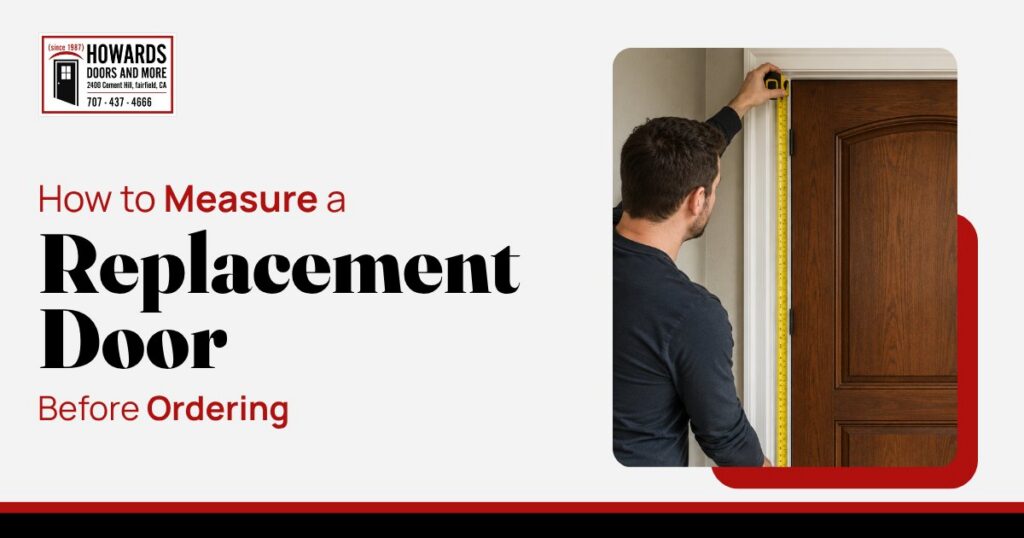
Measure the width of the opening at the top, the middle, and the bottom. Use the smallest of the three numbers as your working width. If you’re replacing just the door slab and keeping the existing frame, measure the slab itself the same way, top, middle, and bottom.
Step 2: Measure the Height
Measure from the floor (or threshold, for exterior doors) straight up to the top of the frame. Take this measurement on the left side, the right side, and in the center, and again use the smallest number.
Step 3: Measure the Jamb Depth
The jamb depth is the thickness of your wall at the doorway, measured from the inside finished surface to the outside finished surface. This number tells us what depth of frame material your replacement door needs to sit flush on both sides. Most standard interior walls land around 4 9/16 inches, but older homes, thicker exterior walls, and stucco exteriors often measure differently, which is exactly why guessing here causes problems.
Door Slab Only vs. Full Door Unit (Pre-Hung)
Before you order, it helps to know which of these you actually need:
- Slab only: You’re keeping your existing frame and hardware, and just replacing the door itself. You’ll need width, height, and thickness.
- Full unit (pre-hung): The door comes already mounted in its own frame, ready to go into the rough opening. You’ll need the rough opening width, height, and jamb depth.
If you’re not sure which applies to your situation, that’s a completely normal question, and it’s worth bringing your measurements (or your old door) in before you commit to an order.
Why Bringing Your Old Door In Beats Measuring Alone
If you’re replacing a door that’s still hanging and still roughly the shape you want, you don’t actually have to rely on a tape measure at all. Howard’s Doors offers a copy door service: bring your old door into our Fairfield shop, and we copy it exactly, hinges, holes, and all, so the new one drops right into your existing frame with no reframing and no guesswork. Most copy orders are ready in 3 to 4 days.
For contractors working off plans rather than an existing door, our team also handles take-off bids and special orders directly from your drawings, so your measurements don’t have to be perfect on the first pass, just close enough to start the conversation.
Measuring for Exterior vs. Interior vs. Commercial Doors
A few things change depending on what you’re measuring:
Interior doors are generally simpler. There’s no threshold to account for, and standard heights and widths are more forgiving since there’s no weatherproofing at stake.
Exterior doors require extra care around the threshold and sill height, since getting this wrong affects how well the door seals against weather, not just whether it fits.
Commercial doors often involve fire ratings, ADA clearance requirements, and hardware specifications that go beyond a straightforward width and height, so these are usually worth a conversation with our team before you finalize an order.
Common Measuring Mistakes That Lead to Reorders
- Measuring only once instead of in three places, then missing that the opening isn’t square
- Using a cloth tape measure instead of a rigid steel one
- Forgetting to measure jamb depth separately from width and height
- Not accounting for flooring that will be added or removed after the door is installed
- Measuring over trim or casing instead of the actual opening
What Happens After You Have Your Measurements
Once you’ve got your numbers, the fastest next step is getting them in front of someone who orders doors every day. Homeowners can request a quote here, and contractors can submit a special order or take-off bid here.
One thing worth knowing upfront: we provide the doors, but we don’t install them. If you need an installer, we’re glad to recommend trusted local contractors we’ve worked with for years, so you’re covered from measurement to move-in either way.
Frequently Asked Questions
What tools do I need to measure a door for replacement?
A rigid steel tape measure is essential, since cloth tape measures can stretch and throw off your numbers. A notepad and a flashlight for checking older or trimmed-out openings are helpful too.
Why do I need to measure in three places instead of just once?
Door openings shift and settle over time, especially in older homes, so the width and height can vary slightly from top to bottom or side to side. Measuring in three places and using the smallest number ensures your new door will actually fit the narrowest point of the opening.
What is jamb depth and why does it matter?
Jamb depth is the thickness of your wall at the doorway. It tells us what depth of door frame you need so the new unit sits flush with the wall on both sides. Standard interior walls are often around 4 9/16 inches, but this varies by home and wall construction, so it should always be measured, not assumed.
Do I need different measurements for a slab-only replacement versus a full pre-hung door?
Yes. A slab-only replacement only needs the width, height, and thickness of the door itself, since you’re keeping the existing frame. A full pre-hung unit requires the rough opening measurements, including jamb depth, since the whole frame is being replaced.
What if I’m not confident in my own measurements?
Bring your old door into our Fairfield shop and we can copy it directly, no tape measure required. Most copy orders are ready in 3 to 4 days and fit your existing frame without reframing.
Does Howard’s Doors install the doors it sells?
No, we supply doors, windows, and moulding but don’t perform installation ourselves. We’re happy to recommend trusted local contractors we’ve worked with for years if you need installation help.